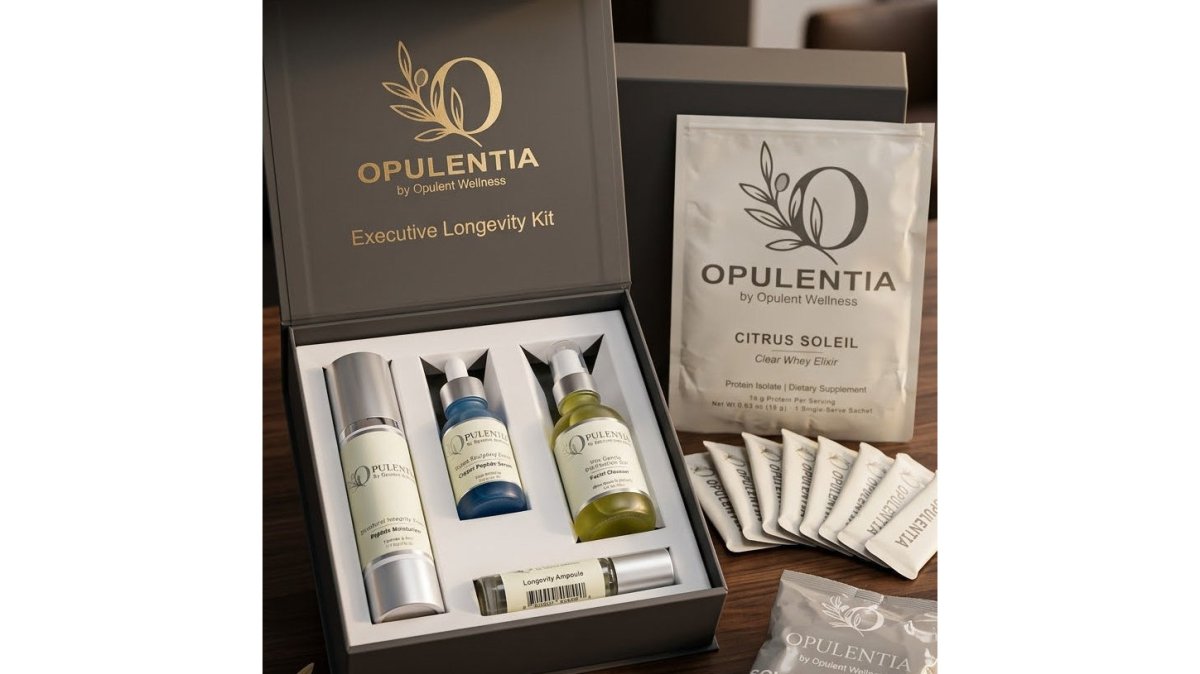
Executive Longevity Kit for Weight Management: What to Know
Last Updated: November 7, 2026
Quick Summary
An executive longevity kit for weight management is a bundled protocol combining clinical lab testing, protein and muscle-preservation nutrition, structured fasting or metabolic protocols, physician oversight, and skin and barrier support into one coordinated plan. A useful kit routes every lab result to a clinician who sets your phases and repeat-lab intervals rather than handing you a template.
- A serious kit contains five working parts: baseline labs, protein nutrition, fasting protocols, physician oversight, and skin support.
- Fasting glucose of 100-125 mg/dL is commonly read as prediabetes and prompts a closer look at insulin.
- Clear Whey Elixir delivers 15 grams of protein per single-serve sachet with near-zero fat and sugar.
- Resistance training two to three times weekly is the other half of muscle preservation and no kit replaces it.
- The 30-Day Complete Executive Protocol costs $299 and the 10-Day Executive Travel Protocol costs $229.
Table of Contents
- What Belongs in an Executive Longevity Kit for Weight Management
- Metabolic Health Testing: The Baseline That Decides Everything
- Longevity Protein and Muscle Preservation During Weight Loss
- Where a Fasting Mimicking Diet Kit Fits, and Where It Does Not
- Building a Personalized Weight Loss Plan Around a Real Schedule
- Safety, Contraindications, and Medication Interactions to Check First
- Comparing Kit Costs and What the Price Actually Buys
- Choose Your Clinical Protocol With Physician Oversight
- Frequently Asked Questions
What Belongs in an Executive Longevity Kit for Weight Management
An executive longevity kit for weight management is a bundled protocol that combines clinical testing, protein and nutrition support, skincare, and physician oversight into one coordinated plan for high-performing professionals. Below, we break down exactly what separates a useful kit from an expensive box of supplements.
The market is moving fast. Future Market Insights' weight management market forecast projects the category growing from USD 460.4 billion in 2026 to USD 966.7 billion by 2036. That growth means more kits, more claims, and more noise. Most guides get this wrong by listing ingredients without explaining what each component actually does for a busy executive's body composition.
The Five Components That Carry the Workload
A serious executive longevity kit for weight management contains five working parts. Skip any one and the protocol develops a weak link.
- Baseline lab testing to establish metabolic markers before any intervention
- Protein and muscle-preservation nutrition to protect lean mass during a deficit
- Structured fasting or metabolic protocols for insulin and appetite control
- Physician oversight to review results and adjust the plan
- Skin and barrier support because rapid weight loss changes facial architecture
The last item addresses visible changes that can accompany rapid weight loss.
Metabolic Health Testing: The Baseline That Decides Everything
Metabolic health testing is the process of measuring blood glucose, insulin sensitivity, lipid panels, inflammatory markers, and related biomarkers before designing a weight-management protocol. Without it, a personalized weight loss plan is a template, not a prescription.

For a deeper breakdown of which panels matter for an executive baseline, our guide on what to test for metabolic health walks through each biomarker and why it belongs in the first draw.
How to Read Fasting Labs and Biomarkers
Fasting labs are drawn after a period without food, which gives a clean read on baseline glucose and insulin. Three markers do most of the work:
- Fasting glucose shows immediate blood sugar control. Most clinical labs report a reference range of roughly 70-99 mg/dL; values in the 100-125 mg/dL band are commonly read as prediabetes and are the point where a clinician typically adds a closer look at insulin and waist circumference.
- HbA1c reflects a three-month average and catches drift a single draw misses. A common interpretation framework treats below 5.7% as normal, 5.7-6.4% as prediabetes, and 6.5% or above as diabetes, thresholds a physician uses to decide whether the first phase of a protocol should prioritize glucose control over aggressive deficit.
- Fasting insulin reveals insulin resistance long before glucose rises. There is no universal cutoff, but many practitioners flag values above roughly 10-15 µIU/mL as worth a conversation, especially when paired with a high-normal HbA1c or elevated triglycerides.
A lipid panel and a high-sensitivity C-reactive protein (hs-CRP) round out the picture. Triglycerides, HDL, and the triglyceride-to-HDL ratio are commonly used as a cheap proxy for insulin resistance, and hs-CRP gives a read on systemic inflammation that can slow progress and complicate training recovery.
What Happens After the Draw
The interpretation step is where most kits fall short. A useful protocol routes every result to a clinician who does four things: flags out-of-range values, decides whether the first phase should be a deficit, a metabolic reset, or a medical workup, sets a repeat-lab interval (commonly 90 days for a first recheck, sooner if a value is clearly abnormal), and documents the baseline so progress is measured against data rather than a scale.
Longevity Protein and Muscle Preservation During Weight Loss
Longevity protein is a protein intake strategy built to preserve lean mass while the body runs a calorie deficit. Muscle loss during weight loss is the most common failure point we see, and it drives the metabolic slowdown that makes regain likely.
For executives eating between meetings, that means portable formats rather than a shaker bottle in a gym bag.
This is where product format matters. Our Clear Whey Elixir in Citrus Soleil delivers 15 grams of protein per single-serve sachet in a light, clear drink that mixes in cold water in seconds. It carries near-zero fat and sugar, so it fits a deficit without adding load. For desk-drawer backup, Sovereign Bites protein gummies provide a smaller, portable option, with 1g of protein per bite.


Watch out: protein alone does not preserve muscle. Resistance training two to three times weekly is the other half of the equation, and no kit replaces it.
Where a Fasting Mimicking Diet Kit Fits, and Where It Does Not
A fasting mimicking diet kit is a structured, low-calorie, low-protein food plan designed to produce fasting-like metabolic effects without full abstinence from food. It is a tool for metabolic reset, not a weight-loss strategy on its own.
Kits work well for a defined window: a five-day reset, a pre-protocol metabolic challenge, or a structured break in a plateau. They work poorly as an ongoing habit. Executives who run them repeatedly without physician review risk losing lean mass and disrupting training recovery.
If your calendar includes a board meeting in the middle of a fasting window, move the window. Fasting protocols bend to the schedule, not the reverse.
Building a Personalized Weight Loss Plan Around a Real Schedule
A personalized weight loss plan is a protocol built around your actual calendar, travel load, and lab results rather than an idealized routine. The plan that survives a heavy quarter is the plan that works. Most guides stop at the phase table; the useful part is what you do on the weeks when the schedule breaks the plan.
Travel Weeks, Board Meetings, and the 90-Day Plan
Structure the protocol in three phases across a 90-day plan:
| Phase | Duration | Focus | Travel Adaptation |
|---|---|---|---|
| Baseline | Weeks 1-2 | Labs, body composition, protocol design | Draw labs before travel |
| Active | Weeks 3-10 | Deficit, protein floor, training | Sachets and gummies replace meal timing |
| Review | Weeks 11-13 | Repeat labs, adjust, plan maintenance | Schedule review after return |
The 30-day protocol suits a targeted reset before a high-visibility event. The six-month program suits executives who want durable change and are willing to repeat labs at the midpoint.
The Four Schedule Scenarios That Break Most Plans
Air travel and time-zone shifts. Cabin dehydration and disrupted sleep raise cortisol and appetite, and airport food is where protein floors collapse. Carry single-serve protein sachets that mix in cold water and a small pack of protein gummies so the floor is met before you land.
Back-to-back meeting days. The failure mode is a skipped lunch followed by a heavy dinner. Set a protein floor at breakfast and keep a portable option in the bag for the 3 p.m. gap. A 15-gram sachet between meetings is easier to defend than a restaurant lunch you cannot control.
Client dinners and alcohol. Alcohol adds calories, disrupts sleep architecture, and blunts training recovery. A workable rule most practitioners use is a two-drink ceiling on dinner nights and a protein-first order before the entrée arrives.
Sleep disruption and training. Short sleep raises hunger hormones and lowers training quality. On weeks with under six hours of sleep, keep the protein floor but reduce training volume rather than intensity, and do not add a fasting window on top of a sleep deficit, the combination accelerates lean-mass loss.
Watch out: the most common executive mistake is treating a travel week as a write-off and restarting the following Monday.
Tracking Progress Without a Scale
Weight alone is a poor signal for this audience because travel, sodium, and sleep move it by several pounds in a day. Track three things weekly: a protein-floor hit rate (how many days you met the target), a training count, and a waist measurement taken the same morning each week. Bring those to the review phase alongside repeat labs so the clinician can separate real progress from noise.
Safety, Contraindications, and Medication Interactions to Check First
Safety review comes before optimization, not after. Certain conditions and medications change what a kit can safely include.
- Thyroid medication absorption is affected by timing of food and supplements
- Blood pressure and diabetes medications can interact with fasting protocols
- GLP-1 medications such as semaglutide change appetite, digestion, and protein needs
- Kidney conditions warrant physician review of any high-protein plan
If you are on or considering GLP-1 therapy, read our guide on GLP-1 side effects and when to act before layering any fasting or protein protocol on top. Combining interventions without review is the most common mistake we see in executive self-management.
Comparing Kit Costs and What the Price Actually Buys
Kit pricing is not comparable at face value. Two kits at the same price can differ entirely in what they include.
| Kit | Price | Includes | Best For |
|---|---|---|---|
| 10-Day Executive Travel Protocol | $229 | Full-size skincare suite, 10-day protein supply | Business trips, targeted resets |
| 30-Day Complete Executive Protocol | $299 | Full-size skincare suite, 30-day protein supply | Ongoing resilience |
| Opulentia GLP-1 Companion Kit | $299 | Skincare suite, 30-day protein supply | Active GLP-1 therapy |
| Sovereign Bites | $35 | 40 protein gummies | Desk and travel backup |
Price
The 30-Day Complete Executive Protocol is priced at $299, and the 10-Day Executive Travel Protocol is priced at $229.
Cost transparency matters. A kit that hides lab costs, physician fees, or subscription terms is not a kit you can budget for.
Choose Your Clinical Protocol With Physician Oversight
Physician oversight is the difference between a supplement bundle and a clinical protocol. A physician reviews your labs, flags contraindications, adjusts the plan as results come in, and decides when a fasting window or protein target needs to change.
Our clinical skincare and medical weight loss service pairs physician-managed weight loss with clinical-grade skincare, so the protocol protects both metabolic and visible architecture. To see the full starting point, review The Executive Longevity Kit and what it includes.

The challenge is not finding more information. It is finding a protocol built on your own data and supervised by someone accountable for the outcome. Opulent Wellness combines a physician-led approach, concierge telehealth access, and clinical-luxury nutrition and skincare in one ecosystem. Get started with Opulent Wellness and build a weight-management protocol grounded in your baseline labs, not a template. A protocol grounded in baseline labs can become more useful when those findings are considered alongside the broader picture of health captured by a comprehensive wellness assessment.
Frequently Asked Questions
What should an executive longevity kit for weight management include?
Opulent Wellness offers the Executive Longevity Kit as a 10-day travel protocol at $229 or a 30-day complete protocol at $299.
Can protein supplements support weight management?
Protein helps preserve lean mass while you lose fat, and it supports satiety between meals. That matters more during rapid weight loss, including GLP-1 therapy, when muscle depletion is a real risk. Opulent Wellness Sovereign Bites deliver 1g of protein per bite in a 40-gummy two-pack for $35, and the Citrus Soleil Clear Whey Elixir packs 15g of protein per sachet for $39.99. Aim for steady intake across the day rather than one large serving.
Are fasting mimicking diet kits appropriate for everyone?
No. Fasting protocols of any kind need medical clearance if you take glucose-lowering medication, have a history of disordered eating, are pregnant, or manage a chronic condition. They also interact poorly with heavy training blocks and high-stress travel weeks. Ask a physician to review your fasting labs and medications before starting, and
How does a clinician personalize a weight management plan?
A physician reviews your health information and works with you on a personalized weight-management plan under physician-led oversight.


Written by Rochelle Jones