7 Realities About Protein Gummies for GLP-1 Users
Last Updated: October 26, 2026
Quick Summary
Protein gummies help maintain protein intake on GLP-1 by delivering small, portable protein doses when appetite is low, but they are a supplement, not a meal. At about 1 g of protein per bite, they close gaps rather than replace shakes or whole-food protein.
- A 2025 review reports a working protein range of 1 to 1.5 g per kilogram of body weight.
- A 180 lb adult lands near 82 to 122 g of protein per day using body-weight math.
- Closing a 20 g protein gap with gummies at 1 g per bite means eating roughly 20 pieces.
- Check grams of protein per serving and serving size versus pieces before buying any gummy.
- Take gummies between meals, not on a full stomach, and keep servings small during nausea.
Table of Contents
- Why Protein Gummies Fit GLP-1 Appetite Realities
- How Much Protein on GLP-1 Do You Actually Need?
- High-Protein Foods for GLP-1 Users Who Feel Full Fast
- Protein Gummies vs Protein Shakes: What Each One Does
- How to Read a Protein Gummy Label Before You Buy
- Protein Supplements on GLP-1: Safety, Nausea, and Timing
- Build a Daily Protein Plan That Includes Gummies
- Choosing Your Protein Protocol With a Physician
- Frequently Asked Questions
Why Protein Gummies Fit GLP-1 Appetite Realities
Protein gummies for maintaining protein intake on GLP-1 therapy solve a specific problem: you need protein, but your appetite has other plans.
At Opulent Wellness, we built our protein line around this exact tension. Executives on metabolic protocols do not need another chalky powder.
Here is the honest part most guides skip: a gummy is a supplement, not a meal. It fills gaps.
How Much Protein on GLP-1 Do You Actually Need?
Most guidance points to protein intake above the standard 0.8 g per kilogram of body weight per day. A 2025 review found that higher intake is the best option for preserving lean body mass during GLP-1-based therapy (review of nutrition interventions for GLP-1 therapies(https://pmc.ncbi.nlm.nih.gov/articles/PMC12475867/)).
The same review reports a working range of 1 to 1.5 g per kilogram of body weight. A second 2025 review suggests 1.5 g per kilogram of fat-free mass per day may be more accurate, though that requires body-composition data (nutritional priorities for GLP-1 therapy(https://pmc.ncbi.nlm.nih.gov/articles/PMC12304835/)).
What that looks like in practice:
- A 180 lb adult lands near 82 to 122 g per day using body weight
- Fat-free-mass math usually produces a lower, more precise number
- Your clinician sets the final target based on your labs and goals
High-Protein Foods for GLP-1 Users Who Feel Full Fast
When fullness hits after a few bites, protein density matters more than portion size. The goal is maximum grams per small serving.
High-protein foods that work well on low-appetite days:
- Greek yogurt, plain
- Eggs and egg whites
- Cottage cheese
Nutrient-dense choices beat volume every time. A small bowl of Greek yogurt delivers more usable protein than a large salad. Add fiber and hydration alongside, since slowed digestion can work against both.
Protein Gummies vs Protein Shakes: What Each One Does
These two formats solve different problems, and the comparison is not close on protein volume. A shake is a protein delivery vehicle; a gummy is a protein supplement. Understanding that distinction prevents the most common mistake on GLP-1: assuming a gummy can carry the protein load that a shake, powder, or whole-food meal is designed to carry.
| Format | Protein per Serving | Calories per Serving (typical) | Best For | Main Limit |
|---|---|---|---|---|
| Protein gummies | About 1 g per bite; 5-20 g per pouch depending on piece count | Roughly 10-25 calories per bite | Cravings, micro-dosing, portability, low-appetite windows | Low protein per unit; you must eat many pieces to move the number |
| Clear whey shake | 15-20 g per sachet | Roughly 60-90 calories per sachet | Hitting a daily target fast with low volume | Needs water and mixing; texture can be off-putting during nausea |
| Protein powder | Varies by scoop, commonly 20-25 g | Varies by scoop and flavor | Flexible meal building, smoothies, oatmeal | Heavier texture; easy to over-pour |
| Protein bar | 10-20 g | Commonly 180-250 calories | Meal replacement on the move | Added sugar and sugar alcohols in many brands; can feel dense |
A shake wins on grams per serving. A gummy wins on consistency and tolerability. If nausea makes a full shake unappealing, a few small bites still move your number up, but the math matters. At about 1 g per bite, closing a 20 g gap with gummies means eating roughly 20 pieces.
The protein-density math
Protein density, grams of protein per 100 calories, is the number that separates a supplement from a staple. Whole foods and shakes tend to sit high on that ratio; gummies sit lower because the chewy base, sweetener, and flavoring take up weight and calories. That is not a flaw, it is the format. The practical rule: use gummies to add grams you would otherwise skip, and use shakes, powders, and whole foods to build the base of your daily target.
Cost and value per gram of protein
Price per gram of protein is where the formats diverge most. Shakes and powders usually deliver the lowest cost per gram because you are buying protein in bulk. Bars sit in the middle. Gummies typically cost more per gram of protein because you are paying for convenience, portion control, and a format you will actually use on a bad-appetite day.
When each format fits a GLP-1 day
- Morning, low appetite: A clear whey shake sipped over 30-45 minutes often sits better than a solid breakfast.
- Mid-afternoon dip: 5-10 gummies deliver a small protein hit without a heavy feeling.
- Travel or meetings: Gummies and a shaker bottle of clear whey cover both the convenience and the volume needs.
For readers who want the shake side of the comparison, our Clear Whey Elixir in Citrus Soleil delivers 15 g of isolate per sachet with near-zero fat or sugar. Our Crystal Whey Elixir in Lumina Citrus & Mint pushes that to 20 g per serving with zero added sugar.

How to Read a Protein Gummy Label Before You Buy
Start with the protein column, not the front of the pouch. Most gummies market themselves as high-protein when the actual number is small, and the label is where that claim either holds up or falls apart. This is the step most protein guides skip, and it is the one that separates a useful supplement from candy with a health claim.
Check these in order:
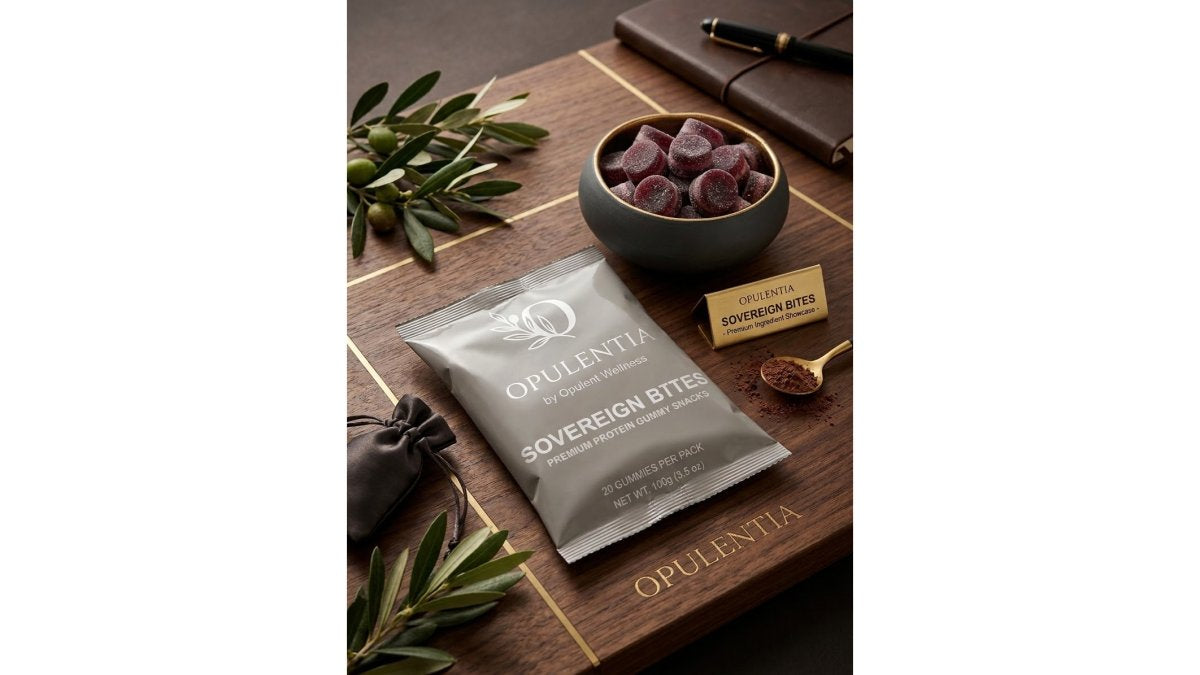
Sovereign Bites | Protein Gummies →
- Grams of protein per serving. One gram per bite is a micro-dose, not a meal. Multiply by the number of pieces you would realistically eat in a sitting.
- Serving size versus pieces. A 20-piece serving changes the math fast. A pouch that claims 20 g of protein may require eating the entire pouch.
- Protein source and quality. Whey concentrate and isolate are complete proteins with all nine essential amino acids. Rice protein is incomplete on its own but complements other sources. Gelatin alone is not a complete protein, it is low in tryptophan and can mislead shoppers who see "protein" on the front.
- Amino-acid profile. A complete protein supplies all nine essential amino acids in adequate amounts. Blends of whey plus rice or pea are common in gummies precisely because they close each other's gaps.
- Added sugar. Sugar-free sweeteners like erythritol, allulose, and stevia keep calories low. Watch for sugar alcohols in large amounts, they can cause bloating and digestive upset, which matters more on a GLP-1 medication that already slows digestion.
- Filler ingredients. Artificial dyes, sugar syrups, and harsh fillers add nothing to protein intake.
- Allergens. Milk shows up in most whey-based gummies; soy and tree nuts appear in some blends.
Compare products on protein per gram, not per pouch
The fair comparison is cost per gram of protein and protein per 100 calories. Divide the package price by the total grams of protein in the package to get cost per gram. Then check how many calories you spend to get those grams. A gummy that delivers 20 g of protein for 200 calories is a different product from one that delivers 20 g for 400 calories, even if the front of the pouch looks the same.
A quick label red-flag list
- "High protein" with no gram count on the front
- Protein listed per piece but serving size set at 10+ pieces
- Gelatin as the only protein source
Our Sovereign Bites protein gummies print the full breakdown on the pouch: 1 g of protein per bite, 20 g per pouch, whey concentrate plus organic brown rice protein, and a milk allergen warning. That combination, a complete-protein blend with a clear per-piece count, is what a transparent label looks like.

Bring the label to your clinician
If you take a GLP-1 medication, show the supplement label to your prescriber or a registered dietitian. They can flag sugar alcohols that may worsen digestive symptoms, allergens that conflict with your restrictions, and whether the protein contribution is worth the cost for your target. That conversation takes five minutes and prevents most supplement mistakes.
Protein Supplements on GLP-1: Safety, Nausea, and Timing
Timing matters as much as dose when nausea is in play. Small amounts spread through the day usually sit better than one large serving.
Practical rules:
- Take gummies between meals, not on a full stomach
- Keep servings small during active nausea windows
- Sip fluids steadily to support hydration and fiber intake
Protein supplements on GLP-1 are generally well tolerated, but tolerability varies by person and by dose. If nausea or digestive symptoms spike, scale back and raise it with your care team. Readers weighing broader options can review GLP-1 alternatives for weight loss for context on what else exists.
Build a Daily Protein Plan That Includes Gummies
Treat gummies as a bridge, not a base. Build the day around whole-food protein, then use gummies to close the gap on low-appetite afternoons.

A simple structure:
- Morning: Greek yogurt or eggs, 20 g
- Midday: Small chicken or tuna portion, 20-25 g
- Afternoon dip: 5 to 10 Sovereign Bites, 5-10 g
For a ready-made version of this routine, the Opulentia GLP-1 Companion Kit bundles a 30-day clear whey supply with a full skincare protocol built for rapid weight-loss changes.

Choosing Your Protein Protocol With a Physician
Numbers on a label do not know your labs, your medication dose, or your muscle baseline. A physician-led plan does.
Bring three things to your next appointment: your current protein target, your gummy and shake intake, and any nausea patterns. Ask whether body-weight or fat-free-mass math fits your situation. Then adjust.
At Opulent Wellness, our concierge model pairs physician oversight with nutraceuticals designed for exactly this kind of protocol. You get a plan built around your data, not a generic chart.
Frequently Asked Questions
Can protein gummies help you meet your protein needs on GLP-1 medication?
They can contribute, but only as a small part of the total. A 2025 review in PMC12475867 states that protein intake above 0.8 g per kilogram of body weight per day is the best option for preserving lean body mass during GLP-1-based therapy. A gummy delivering 1 g of protein per bite adds up slowly, so treat protein gummies as a convenient top-up between meals rather than the backbone of your daily protein target.
How many grams of protein are in protein gummies?
It varies widely by brand, which is why the label matters more than the packaging. Some gummies are candy with a token protein claim, while others deliver a precise micro-dose per bite. Opulentia Sovereign Bites, for example, provide 1 g of bio-available protein per bite, with 20 g per pouch and 40 g per two-pouch order. Check grams of protein per serving and per piece before you assume a gummy covers a meaningful share of your day.
Are protein gummies enough to replace a protein shake or meal?
No. A shake or a meal delivers 15 to 30 g of protein in one sitting, while most gummies deliver a few grams per serving. Research on GLP-1 nutrition, including PMC12304835, points to 1.5 g of protein per kilogram of fat-free mass per day as a potentially more accurate target, and reaching that with gummies alone is impractical. Use gummies for convenience and shakes or whole foods for volume.
Can you get enough protein from supplements alone while on GLP-1?
Supplements help when appetite is low, but they should not carry your entire intake. High-protein foods for GLP-1 users, such as Greek yogurt, eggs, fish, and poultry, also bring fiber, micronutrients, and hydration that powders and gummies do not. A realistic split is whole foods at meals, a shake when you cannot face a full plate, and protein gummies for gaps between appointments.
Most people on GLP-1 therapy underestimate how much protein they lose to low appetite, and gummies only help if they sit inside a real plan. Opulent Wellness combines physician-led protocols with protein formats built for small appetites: precision-dosed Sovereign Bites, clear whey elixirs at 15 and 20 g per serving, and the Companion Kit that ties nutrition and skin support together. Get started with Opulent Wellness and build a protein protocol that holds your lean mass while the scale moves.