Skin Laxity After Rapid Weight Loss: A Clinical Guide
Table of Contents
- Why Skin Laxity Occurs After Rapid Weight Loss
- Loose Skin After GLP-1 Weight Loss: What's Different
- Areas Most Commonly Affected by Skin Laxity
- Can Loose Skin Tighten Naturally Over Time
- How to Tighten Loose Skin After Weight Loss: Clinical Interventions
- Skin Tightening Treatments After Weight Loss: Professional Options
- Timing, Cost, and Realistic Expectations
- Your Clinical Protocol for Skin Preservation
- Frequently Asked Questions
Last Updated: October 21, 2026
Why Skin Laxity Occurs After Rapid Weight Loss
Skin laxity after rapid weight loss happens because your skin cannot keep pace with the speed at which your body sheds volume. Slow weight loss gives skin time to contract and adapt; rapid loss, particularly through GLP-1 therapies or aggressive caloric restriction, outpaces your skin's capacity to remodel itself, leaving loose, sagging tissue.
The fundamental issue lies in the extracellular matrix (ECM), the structural scaffolding beneath your skin's surface, composed of collagen and elastin fibers that provide firmness and resilience.
The Extracellular Matrix Collapse
Collagen provides tensile strength; elastin provides recoil. With gradual weight loss, fibroblasts have time to remodel the matrix proportionally. With rapid loss, remodeling cannot keep up, and the ECM becomes redundant relative to underlying tissue volume.
Rapid weight loss also triggers inflammatory cascades: systemic inflammation accelerates collagen degradation while suppressing new collagen synthesis, so existing structural proteins break down while replacement lags behind demand.
How Weight Loss Speed and Amount Affect Skin Elasticity
The degree of skin laxity correlates with two variables: total weight lost and the velocity of that loss. Losing 50 pounds over two years produces different outcomes than losing 50 pounds in four months.
Age compounds this effect. A 35-year-old losing 40 pounds rapidly may experience mild laxity; a 55-year-old losing the same amount often develops moderate to severe laxity because baseline elastin production has already declined by 1% annually since age 25.
Age, Genetics, and Individual Factors
Genetics determine your baseline skin elasticity and the rate at which collagen and elastin degrade. Some inherit strong collagen architecture and retain resilience into their 60s; others lose firmness by their 40s.
Chronic stress and elevated cortisol further compromise skin quality during weight loss, suppressing collagen synthesis and accelerating inflammatory pathways. This is why executives using GLP-1 therapies often report more pronounced skin laxity than their baseline age and weight loss would predict.
Loose Skin After GLP-1 Weight Loss: What's Different
GLP-1 medications (semaglutide, tirzepatide) accelerate both fat loss and muscle loss if protein intake and resistance training are not prioritized.
Appetite suppression can inadvertently reduce protein consumption, further compromising collagen synthesis when demand is highest.
At Opulent Wellness, we recognize that GLP-1 therapy represents a clinical opportunity to intervene proactively. Our physician-led approach pairs metabolic optimization with targeted skin preservation protocols.
Areas Most Commonly Affected by Skin Laxity
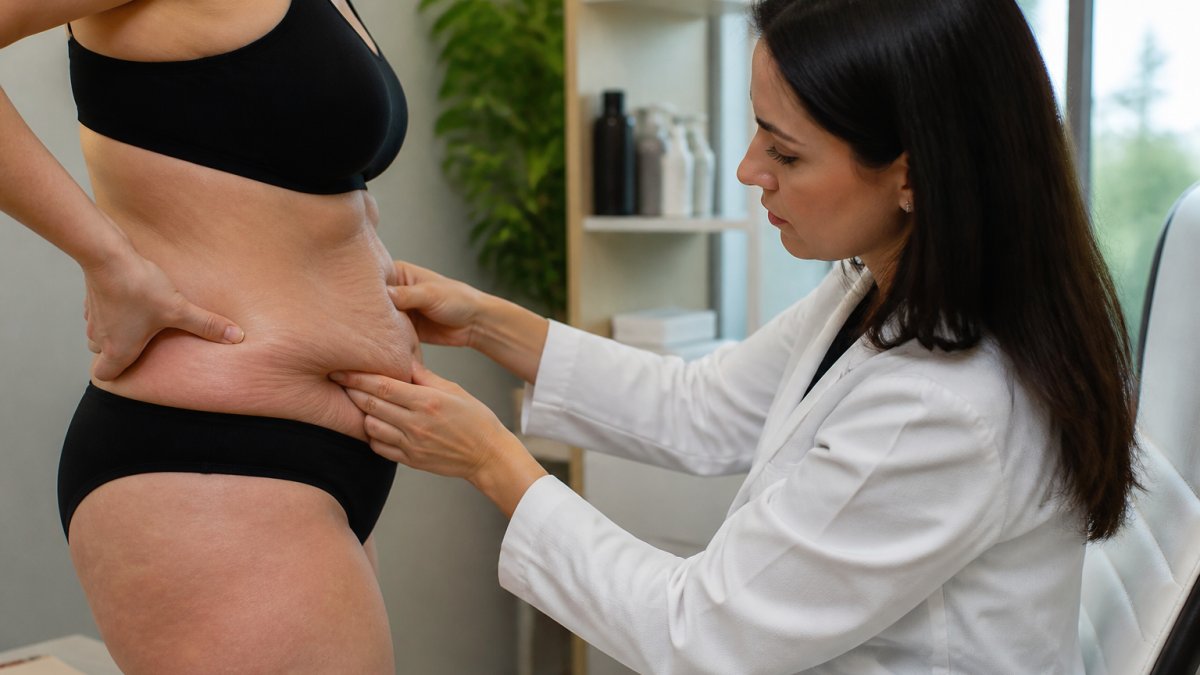
Skin laxity after rapid weight loss concentrates in areas with the highest subcutaneous fat density and mechanical stress. The abdomen is affected most frequently, followed closely by the upper arms, thighs, and lower abdomen.
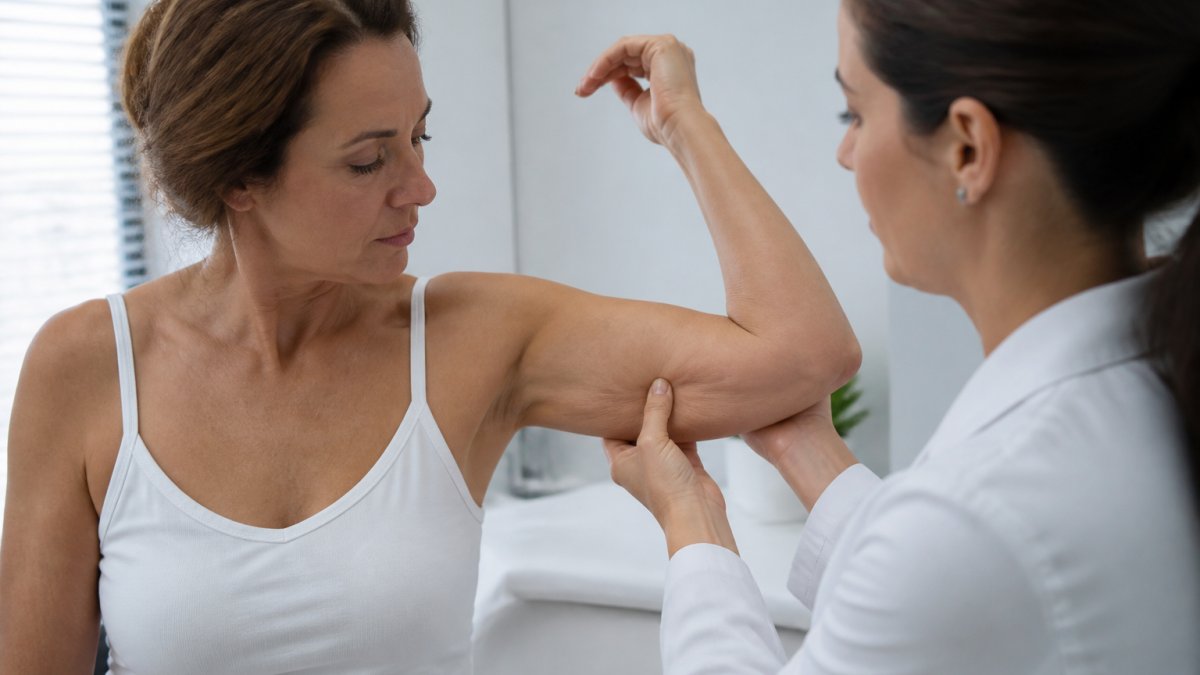
Severity in each area depends on baseline fat distribution, skin thickness, and genetics.
Can Loose Skin Tighten Naturally Over Time
Skin does tighten naturally after weight loss, but improvement depends on age, genetics, and magnitude of loss. Under 40 with modest loss (15-25 pounds), 70-80% of laxity often resolves within 12-18 months as collagen remodels.
Natural tightening occurs through fibroblast-mediated collagen remodeling, increased blood flow, and mechanical recoil of remaining elastic fibers. It is gradual and incomplete in rapid weight loss because the initial metabolic shock suppresses the very mechanisms needed for recovery.
Timeline: How Long Does It Take for Skin to Tighten After Weight Loss
In the first 3-6 months after weight loss stabilizes, you'll see rapid improvement as acute inflammation resolves and collagen remodeling begins. Between 6-12 months, improvement continues more slowly. After 12-18 months, most natural remodeling has plateaued, and remaining laxity typically requires professional intervention.
This timeline assumes weight stability; continued fluctuation resets the clock. For GLP-1 users, true weight stability, where appetite and metabolic rate normalize, can take 6-12 months after reaching goal weight.
How to Tighten Loose Skin After Weight Loss: Clinical Interventions
Skin tightening after rapid weight loss requires a layered approach: structural support (strength training), nutritional substrate (protein and hydration), topical intervention (medical-grade skincare), and when necessary, professional treatments. The most effective protocols integrate multiple modalities.
Strength Training and Muscle Tone Development
Resistance training rebuilds muscle mass lost during rapid weight loss, restoring volume beneath the skin. Beyond aesthetics, muscle provides structural support that makes loose skin appear less pronounced, and training stimulates growth factor release and dermal blood flow, favoring collagen remodeling.
A structured resistance program targeting major muscle groups (chest, back, shoulders, quadriceps, glutes) performed 3-4 times weekly for 8-12 weeks produces visible improvements in skin appearance. The effect is most pronounced in the upper arms, shoulders, and thighs.
Nutrition, Hydration, and Protein Synthesis
Collagen synthesis requires adequate protein, vitamin C, zinc, and copper. During and after rapid weight loss, protein needs increase to 1.0-1.2 grams per pound of goal body weight to support muscle preservation and skin matrix remodeling; inadequate protein directly suppresses collagen production and delays tightening.
Hydration supports dermal turgor and nutrient transport. Rapid weight loss often causes relative dehydration despite adequate fluid intake because metabolic rate and thermoregulation shift.
Medical-Grade Skincare and Topical Support
Medical-grade skincare with copper peptides, retinoids, and peptide complexes can stimulate fibroblast activity and accelerate collagen remodeling by signaling skin cells to increase matrix protein synthesis. The Dermal Preservation Duo from Opulent Wellness, for example, combines a purifying gel with a copper peptide serum (Azure Sculpting Elixir) engineered to optimize dermal permeability and deliver high-concentration bioactive copper, which directly stimulates collagen synthesis and cross-linking.

Consistent application of targeted topical support, twice daily for a minimum of 8-12 weeks, produces measurable improvements in skin texture and firmness. Results are most apparent in mild to moderate skin laxity; severe laxity typically requires professional intervention alongside topical support.
The Architecture of Vitality →
| Intervention | Timeline | Best For | Realistic Outcome |
|---|---|---|---|
| Strength training (3-4x/week) | 8-12 weeks | Upper arms, shoulders, thighs | 20-40% improvement in appearance |
| Medical-grade skincare | 8-12 weeks | Mild to moderate laxity | Improved texture, 15-30% firmness gain |
| Nutrition optimization | 12+ weeks | Foundational collagen support | Supports all other interventions |
| Professional treatments | Varies | Moderate to severe laxity | 50-80% improvement depending on modality |
Skin Tightening Treatments After Weight Loss: Professional Options
When natural tightening and conservative interventions reach their limit, professional treatments offer more dramatic results. These modalities fall into two categories: energy-based nonsurgical treatments and surgical body contouring.
Nonsurgical Energy-Based Treatments
Radiofrequency, laser-based skin tightening, and ultrasound therapies stimulate collagen remodeling by delivering controlled thermal energy to the dermis, intentionally triggering acute inflammation that signals fibroblasts to synthesize new collagen.
Radiofrequency treatments are well-tolerated with minimal downtime and can address mild to moderate skin laxity across the body.
These treatments typically require 3-6 sessions spaced 4-6 weeks apart. Results are cumulative and improve over months.
Surgical Body Contouring: When and Why
Surgical body contouring (abdominoplasty, arm lift, thigh lift, lower body lift) removes excess skin and tightens underlying tissues. These procedures are appropriate for severe skin laxity after massive weight loss (typically >60 pounds lost) where nonsurgical treatments have reached their limit or where the volume of excess skin creates functional problems (skin breakdown, hygiene challenges).
Surgical contouring produces 80-95% improvement in skin laxity but involves significant recovery time (4-8 weeks before returning to normal activity) and carries standard surgical risks. Procedures are typically not covered by insurance unless they address functional impairment rather than aesthetic concerns.
Treatment Candidacy, Risks, and Recovery
Candidacy depends on weight stability (at least 3-6 months before treatment), overall health, and realistic expectations. Individuals with active medical conditions, compromised wound healing, or unrealistic expectations are poor candidates.
Nonsurgical treatments carry minimal risks: temporary redness, mild swelling, and rare cases of burns or pigmentation changes. Recovery is typically same-day to 24 hours. Surgical treatments carry standard surgical risks: infection, bleeding, nerve injury, and scarring.
Timing, Cost, and Realistic Expectations
The optimal timing for professional skin tightening is 6-12 months after reaching stable weight, allowing natural remodeling to progress and time to implement conservative interventions.
Cost varies substantially by treatment modality and severity. Nonsurgical energy-based treatments range from $2,000 to $8,000 per series (3-6 sessions).
Realistic expectations are critical. Mild laxity often resolves 70-90% with conservative interventions alone; moderate laxity requires professional treatment for optimal results; severe laxity typically requires surgery for meaningful improvement.
Your Clinical Protocol for Skin Preservation
An integrated clinical protocol addresses skin laxity systematically across three time horizons: during weight loss, immediately after stabilization, and long-term maintenance.
Immediately after weight stabilization (months 1-6): Intensify resistance training, continue nutrition optimization, and escalate topical interventions.
Long-term maintenance (6+ months): Assess remaining laxity objectively.
The Architecture of Vitality digital protocol from Opulent Wellness provides a comprehensive framework for this three-phase approach, specifically engineered for individuals undergoing rapid medical weight loss.

Skin laxity after rapid weight loss is not an inevitable consequence, it's a manageable clinical challenge that responds to systematic intervention.
Frequently Asked Questions
Why does rapid weight loss cause loose skin and skin laxity?
Rapid weight loss outpaces your skin's ability to adapt. The extracellular matrix, the structural framework made of collagen and elastin, collapses when subcutaneous volume disappears quickly. Slower weight loss allows skin elasticity to contract gradually. The speed and amount of weight lost, combined with age and genetics, determine how severe skin laxity becomes. GLP-1 medications and bariatric procedures accelerate this process because weight loss happens over weeks or months rather than years.
Can loose skin tighten naturally after weight loss, and how long does it take?
Skin can improve naturally over time, but the timeline depends on age, genetics, and the degree of laxity. Younger skin with better elastin typically shows improvement within 6-12 months. Those over 40 may see slower natural retraction. Mild skin laxity often improves without intervention; moderate to severe laxity rarely resolves completely on its own. Weight stability is critical, continued fluctuation prevents the skin from adapting. Clinical interventions like resistance training, targeted nutrition, and medical-grade skincare accelerate tightening.
How does loose skin after GLP-1 weight loss differ from other weight loss methods?
GLP-1 medications cause rapid, significant weight loss, often 15-20% of body weight in 6-12 months. This speed compresses the timeline for skin laxity development. The sudden loss of subcutaneous volume often outpaces the skin's biological ability to adapt, creating more severe sagging than gradual weight loss. Individuals using GLP-1 therapies benefit most from proactive interventions: aggressive protein synthesis, resistance training, clinical-grade skincare with copper peptides, and early consultation about nonsurgical or surgical options if laxity is pronounced.
What nonsurgical treatments actually work for skin laxity after weight loss?
Energy-based treatments like radiofrequency and laser-based skin tightening stimulate collagen remodeling and can improve mild to moderate skin laxity. Results vary: expect 20-40% improvement in skin texture and firmness over 3-6 months with a series of treatments. Topical interventions using clinical-grade copper peptides, panthenol, and high-concentration actives support the skin barrier and improve appearance. Resistance training builds muscle mass underneath, improving body composition and reducing the visible impact of loose skin. Combination approaches, clinical skincare, strength training, and professional treatments, deliver the most realistic results.
When should I consider surgery for excess skin after weight loss?
Surgical body contouring (tummy tuck, body lift, arm lift) is appropriate when skin laxity is severe, stable (weight has been stable for 3-6 months), and significantly affects function or quality of life. Surgery removes excess skin and tightens underlying structures. Candidacy depends on overall health, realistic expectations, and tolerance for recovery (2-6 weeks downtime). Costs range from $8,000-$20,000+ depending on procedure scope. Insurance rarely covers cosmetic body contouring unless skin breakdown or infection risk is documented. Consult a board-certified plastic surgeon to evaluate your specific anatomy and goals.
Does building muscle help reduce the appearance of loose skin?
Yes. Resistance training builds muscle mass underneath loose skin, improving body composition and filling out sagging areas. This doesn't eliminate loose skin, but it restores structural definition and reduces the visual prominence of laxity. Strength training also supports collagen synthesis and skin elasticity through improved circulation and nutrient delivery. Combined with adequate protein intake (0.8-1.0 grams per pound of body weight daily), resistance training is one of the most effective non-invasive interventions for skin appearance after weight loss.
What role does nutrition and hydration play in skin tightening after weight loss?
Protein is essential for collagen and elastin synthesis; inadequate intake prevents skin from adapting. Aim for high-quality protein at every meal to support muscle tone and dermal structure. Hydration supports skin barrier function and cellular turnover. Micronutrients like vitamin C, zinc, and copper are cofactors in collagen cross-linking. Medical-grade skincare with bioavailable proteins and copper peptides (like those in the Dermal Preservation Duo) delivers clinical actives directly to the skin while your internal protocol supports structural defense. Nutrition and topical intervention work synergistically.
How do I know if my skin laxity is mild, moderate, or severe?
Mild laxity appears as slight crepey texture or minimal sagging; skin returns to position quickly when pinched. Moderate laxity shows visible sagging that persists, with noticeable folds or loss of definition. Severe laxity involves pronounced hanging skin that affects function, comfort, or causes skin-fold irritation. A board-certified dermatologist or plastic surgeon can assess your specific degree of laxity and recommend appropriate interventions, from clinical skincare and resistance training for mild cases to professional treatments or surgery for moderate to severe laxity.